Logistics Management: The Invisible System Powering Global Commerce

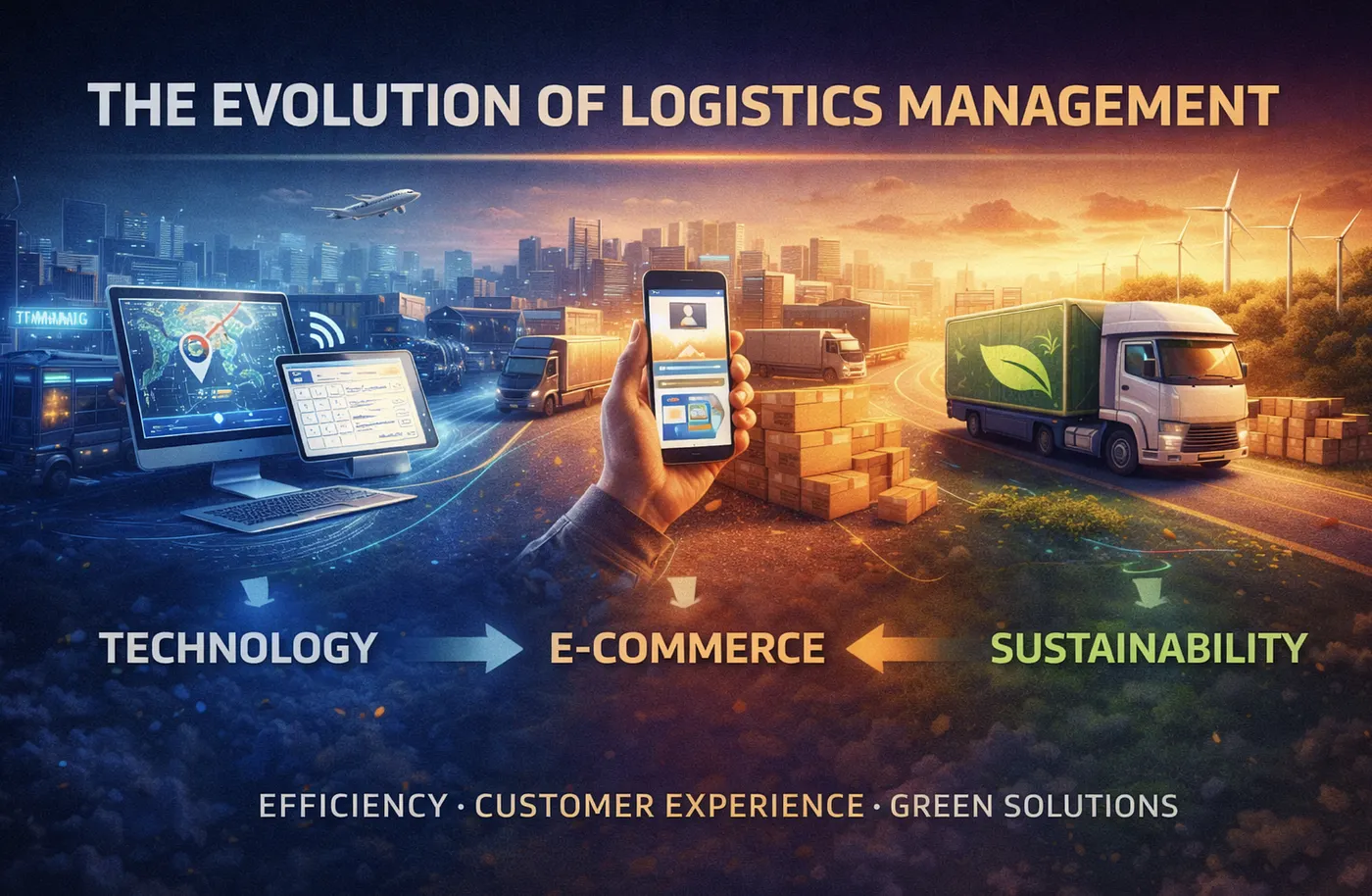
TL;DR
- Logistics management is the system behind every delivery, shipment, and warehouse operation and most companies still run it on spreadsheets and WhatsApp.
- The shift from manual coordination to digital logistics platforms is accelerating in 2026, driven by rising fuel costs, customer expectations, and multi-country operations.
- We’ve been building Limadi, a logistics operating system for a Danish client, for over two years. It now handles 2,000+ stops per day across fleet tracking, route planning, automated invoicing, and driver management.
- The biggest lesson: logistics software isn’t about replacing people. It’s about giving operations teams visibility they didn’t have before.
Most logistics companies don’t have a technology problem. They have a visibility problem.
The vehicles are moving. The deliveries are happening. The invoices eventually go out. But ask the operations manager which routes are actually profitable, or how many hours the fleet sat idle last week, or why invoicing took eleven days instead of two and the answer is usually silence, or a spreadsheet someone hasn’t updated since Thursday.
We’ve spent the last two and half years building logistics software that solves exactly this. What started as a transport management tool for a European client now handles 2,000+ stops per day fleet tracking, route optimization, automated invoicing, driver management, all on one platform.
That experience changed how we think about logistics management entirely. Here’s what we learned and what most companies still get wrong.
What Logistics Management Actually Means (Beyond the Textbook)
Ask Google and you’ll get the standard definition: logistics management is the planning, coordination, and control of how goods move from origin to destination.
That’s technically correct. It’s also useless for anyone actually running an operation.
In practice, logistics management is answering these questions every single day: Where are our vehicles right now? Which routes are profitable and which are bleeding money? When a driver sits idle for 3 hours, does anyone know? Can a client check their shipment status without calling the operations team at midnight?
Most companies even large ones with hundreds of vehicles still answer these questions through phone calls, WhatsApp groups, and Excel sheets. It works until it doesn’t. And the moment you add a second country, a second client vertical, or a hundred more daily stops, the manual approach collapses.
The Five Parts of Logistics That Actually Matter
Textbooks will list twelve components of logistics management. In our experience building logistics platforms, five of them determine whether an operation scales or breaks.
1. Fleet Visibility
You can’t manage what you can’t see. Real-time fleet tracking isn’t a luxury anymore it’s the baseline. When we built Limadi, the first module was live GPS tracking across the entire fleet. Not because it’s the flashiest feature, but because everything else depends on it.
Without fleet visibility, route optimization is guesswork. Driver accountability is impossible. And client-facing tracking the feature that separates modern logistics companies from the rest doesn’t exist.
2. Route Intelligence
Knowing where your trucks are is step one. Knowing which routes actually make money is step two and most companies never get there.
Route intelligence means tracking profitability per kilometer, factoring in fuel costs, idle time, tolls, and turnaround time. When we added route cost analytics to Limadi, the client discovered that three of their most-used routes were operating at a loss. They’d been running those routes for over a year without knowing.
3. Warehouse and Stop Management
Modern logistics isn’t just about moving things between two points. It’s about managing what happens at each stop pickups, deliveries, loading sequences, time windows, special handling requirements.
Limadi handles 2,000+ stops per day. Each stop has its own rules, time constraints, and unit types. Managing that manually is where operations teams burn the most hours. Automating stop management was the single change that freed the most operational time for our client.
4. Invoicing and Multi-Currency Billing
This is the part nobody talks about, but it’s where most logistics companies leak revenue.
When you’re operating across countries our client serves multiple European markets invoicing gets complicated fast. Different currencies, different tax rules, different client billing structures. Manual invoicing means errors. Errors mean revenue loss.
We built automated invoicing into Limadi that generates bills per client, per route, per service type. The client’s accounts team went from spending days on monthly invoicing to spending hours. That’s real money saved, not a feature on a slide deck.
5. Client-Facing Visibility
Here’s what changed the game for our client: giving their customers a portal where they could check shipment status, download documents, and see delivery history without calling the operations team.
The result wasn’t just happier customers. It was fewer inbound calls, fewer status update emails, and operations staff freed up to focus on actual operations instead of answering “where’s my delivery?” forty times a day.
What Goes Wrong Without a System
We’ve talked to logistics companies across Africa, Europe, and the Middle East while building Limadi. The pattern is always the same.
Stage 1: It works. Small fleet, few clients, manageable routes. Excel and WhatsApp handle it fine.
Stage 2: Growth. More vehicles, more clients, more stops. The operations manager is now the bottleneck they’re the only person who knows where everything is, and they’re fielding calls all day.
Stage 3: The crack. A missed delivery. A billing error that takes weeks to find. A route that’s been losing money for months and nobody noticed. A client leaves because a competitor offered them a tracking dashboard.
Stage 4: The rewrite. The company realizes it needs a custom software system but now they’re building it under pressure, with existing clients waiting and operations running on duct tape.
If we had to do it again with our Danish client, we’d push for the digital backbone earlier. The transport management tool should have been designed as a platform from day one. We built it incrementally which worked but the companies that start with a systems mindset from the beginning scale faster and with less pain.
Where Logistics Technology Is Heading in 2026
Three shifts are happening right now that every logistics company needs to pay attention to.
AI-powered route optimization is moving from experimental to production-ready. Not just shortest-path algorithms actual predictive routing that factors in traffic patterns, weather, driver behavior, and historical delivery windows. We’re integrating these capabilities into Limadi now.
Driver and rider apps on basic devices matter more than most tech companies realize. In markets across South Asia and Africa, drivers aren’t carrying flagship phones. Logistics apps that work on basic Android, handle offline mode, and sync when connectivity returns are the ones that actually get adopted. We learned this the hard way.
Green logistics is becoming a client requirement, not a PR exercise. European companies in particular are starting to require emissions reporting from their logistics partners. Route optimization that minimizes fuel consumption isn’t just cost-effective anymore it’s a contract requirement.
The Real Lesson: Logistics Software Isn’t About Technology
After two and half years of building Limadi, the biggest takeaway isn’t technical.
It’s this: logistics companies don’t need more technology. They need visibility.
The operations manager who can see fleet utilization, route profitability, and client delivery status on one screen makes better decisions than the one juggling four WhatsApp groups and three Excel files. The accounts team that generates invoices automatically catches errors that manual processes miss. The client who can track their own shipment doesn’t call the operations desk at 11 PM.
The technology is the vehicle. Visibility is the destination.
If you’re running a logistics operation and the questions we asked at the beginning of this article where are the vehicles, which routes are profitable, can clients self-serve don’t have instant answers, the gap is costing you more than you think.
What’s the biggest operational blind spot in your logistics business?
FAQ
What is logistics management? Logistics management is the coordination of transportation, warehousing, inventory, and distribution to move goods efficiently from origin to customer. In practice, it’s about giving operations teams real-time visibility across the entire supply chain.
Why do logistics companies need custom software? Off-the-shelf tools handle generic use cases. But logistics operations with multiple client verticals, multi-country routes, or complex invoicing structures need custom platforms built around their specific workflows.
What is a logistics operating system? A logistics operating system combines fleet tracking, route optimization, warehouse management, invoicing, and client visibility into one platform. It replaces the patchwork of spreadsheets, WhatsApp, and disconnected tools that most companies use.
How does route optimization reduce costs? By analyzing fuel consumption, idle time, distance, and turnaround per route, companies can identify unprofitable routes and optimize delivery sequences. Our client discovered three loss-making routes within weeks of adding route analytics.
What is the role of AI in logistics? AI enables predictive routing, demand forecasting, and automated decision-making. In 2026, AI-powered logistics tools are moving from experimental to production-grade, particularly for route optimization and delivery window prediction.
How long does it take to build a logistics platform? It depends on scope. A basic fleet tracking MVP can be ready in 8–12 weeks. A full enterprise logistics system with multi-tenant support, automated invoicing, and client portals takes 6–12 months of iterative development.
Junior Software Engineer
A software engineer focused on solving real-world problems through practical engineering, AI-driven development, and scalable systems.
Comments
Read Next
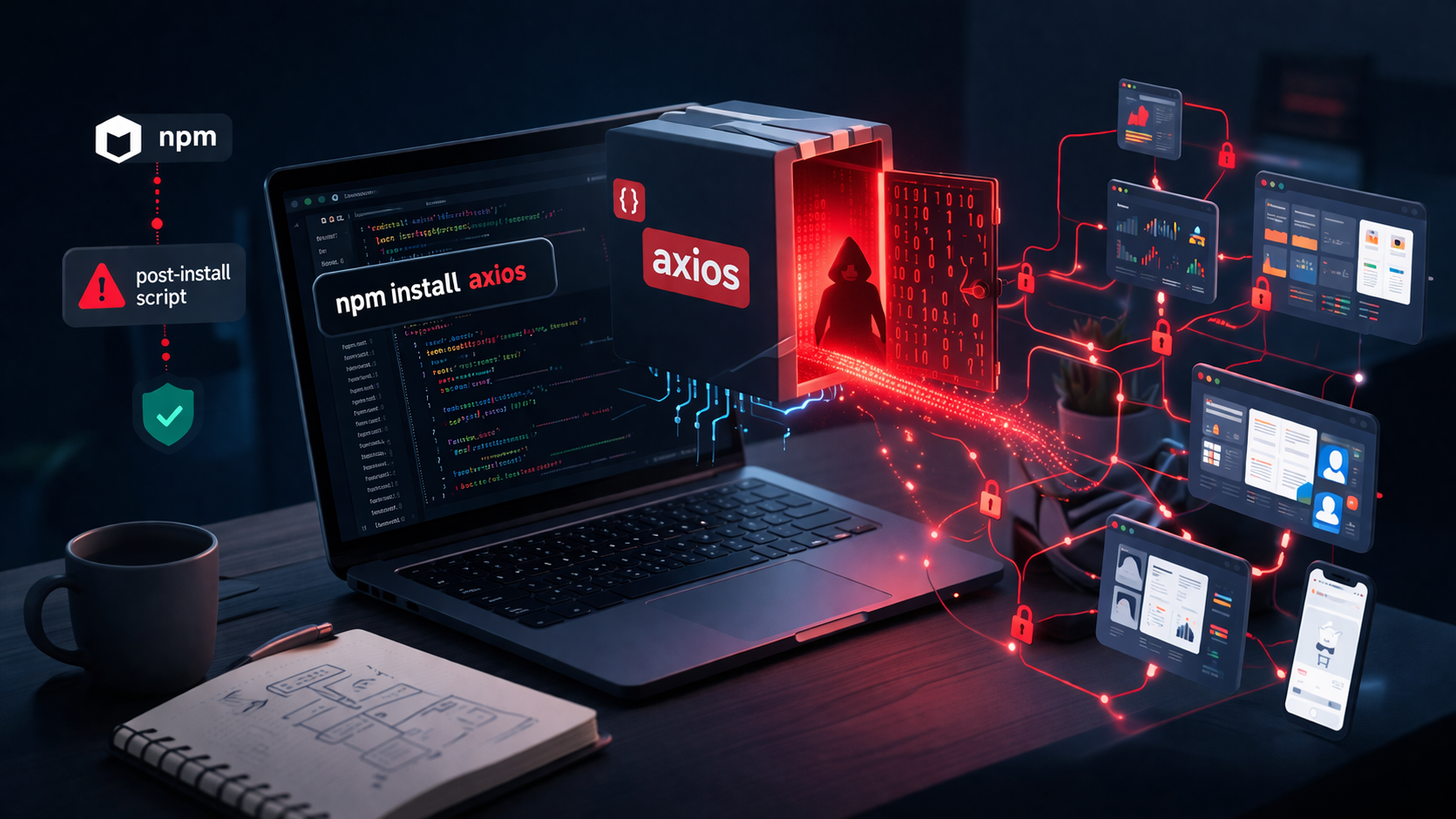
The Axios Hack of 2026: How a Trusted npm Library Quietly Became a Backdoor Into Thousands of Apps
A stolen npm token. A hidden post-install script. 45 million weekly downloads turned into an attack surface. The Axios supply chain hack of March 2026 was invisible, precise, and terrifying. We break down the 6-step attack chain, the blast radius, and what every dev team should change today.
The AI Tipping Point: Why 2026 Is the Year Software Stopped Waiting for Instructions
Software used to wait. In 2026, it stopped. AI systems now chain decisions, evaluate their own output, and act on goals not instructions. We break down what this means for developers, infrastructure costs, security, workforce shifts, and how teams choose a software development partner today.
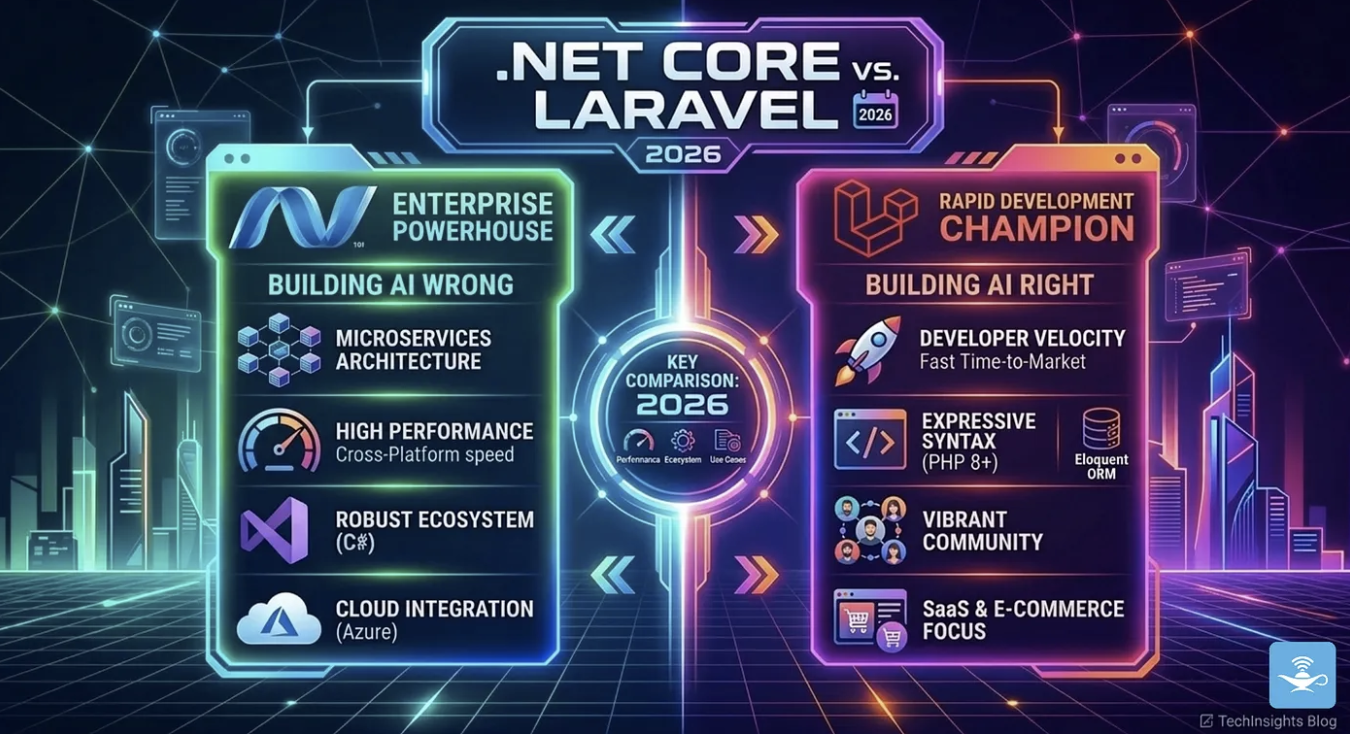
.NET Core vs Laravel in 2026: We Use Both, Here’s How We Decide
We build on both .NET Core and Laravel in production. Our logistics platform (2,000+ stops/day) runs on .NET. Our invoicing product runs on Laravel. This isn't about which is better it's the decision framework we actually use, with real benchmarks, real costs, and when to pick which.